


Your toilet is running constantly, water is pooling at the base, or it just won’t flush right — and you’re wondering whether to call a plumber and hand over $150–$300 for a repair you could handle yourself in under an hour.
I’ve been there more times than I can count. As a licensed builder and property manager with over 25 years of hands-on experience renovating and maintaining homes, I can tell you that the parts of a toilet are far simpler than most people assume.
And once you understand how each component works, nearly every common toilet problem becomes a genuine DIY fix.
This guide gives you a complete, labeled toilet tank diagram, explains every part by name and function, and walks you through the most important repairs step by step.
Whether you’re dealing with a running toilet, a ghost flush, or water seeping from the base, you’ll find your answer here.
Common Toilet Problems & Quick-Diagnosis Table
In my years managing properties and completing home renovations, I’ve seen the same toilet failures repeat across dozens of different homes and toilet brands. Here’s the fastest diagnostic reference I know:
| Symptom | Most Likely Cause | Fix |
|---|---|---|
| The toilet runs continuously | Worn flapper or float set too high | Replace flapper; lower float |
| “Ghost flush” — refills on its own | Slow flapper leak from tank to bowl | Replace flapper |
| Weak or incomplete flush | The water level is too low in the tank | Raise the float or adjust the fill valve |
| The tank won’t refill after flushing | Faulty fill valve or closed supply valve | Check supply valve; replace fill valve |
| Water misting inside the tank during refill | Misaligned refill tube spraying into overflow tube | Redirect the refill tube into the tank |
| The tank takes a very long time to refill | Kinked supply line, low water pressure, clogged fill valve | Check supply line; clean or replace fill valve |
| Water is pooling at the toilet base | Failed wax ring | Replace the wax ring |
| The toilet rocks when sat on | Loose floor bolts or a damaged floor flange | Tighten bolts; inspect flange |
| Toilet won’t flush at all | The handle chain is disconnected from the flapper | Reconnect or replace the chain |
| Water running down the overflow tube | Fill valve float set too high | Adjust float down |
“Toilet Parts Diagram”

Some Toilet problems require a professional plumber, but most toilet repairs do not and qualify as simple DIY jobs. The Toilet Diagram (above) lets you quickly identify any toilet’s main components.
Tools Needed To Repair a Toilet:
In addition to studying the toilet diagram and learning about all the toilet parts, it is essential to fix a running toilet. You will need the right tools to perform these simple repairs.
Fortunately, toilets are relatively easy to work on and do not require anything beyond a standard home tool kit. Toilet Repair Tools include:
- Adjustable wrench
- 4- In -1 Screwdriver
- Pliers
- Vice Grips
- Hacksaw (if you’re installing new flange bolts – That do not have EZ snap-off marks)
- Shallow Water Bucket – To catch toilet tank water.
- Soft towel or Sponge for the cleanup
While the specific tools will vary, most repairs can be done using an adjustable wrench and a screwdriver. However, you may have an older toilet in your bathroom.
If so, you may find the toilet has rusted bolts.
In this case, you may also need a pair of vice grips to help you break them loose before removing them with your wrench.
How a Toilet Flushes, Check out this Quick Video:
Toilet Tank Parts:
How Toilet Tank Parts Work Together
When you push the handle (trip lever), it lifts the flapper, allowing water from the toilet tank to rush into the toilet bowl.
As the water level drops, the float drops too, opening the fill valve to let fresh water flow in. Once the tank refills, the float rises and shuts off the fill valve — preventing overflow.
Some people refer to these toilet parts as the “toilet insides” – simply because they are inside the toilet tank.
Inside a Toilet Tank, you will find Two Types of flushing mechanisms:
One is the “Flush Valve,“ and the other is the “Fill Valve.“
All Toilet Tank Parts Include:
- Toilet Tank
- Toilet Tank Lid
- Toilet Lever
- Toilet Tank Fill Valve (Refill tube)
- Toilet Tank Flush Valve (Overflow tube)
- Toilet Flapper
If you need help identifying them, refer to the toilet parts diagram (Above) for a complete list of interior Toilet Parts. (Incidentally, unless you need to replace your Fill Valve completely, the repairs below will not require any tools.
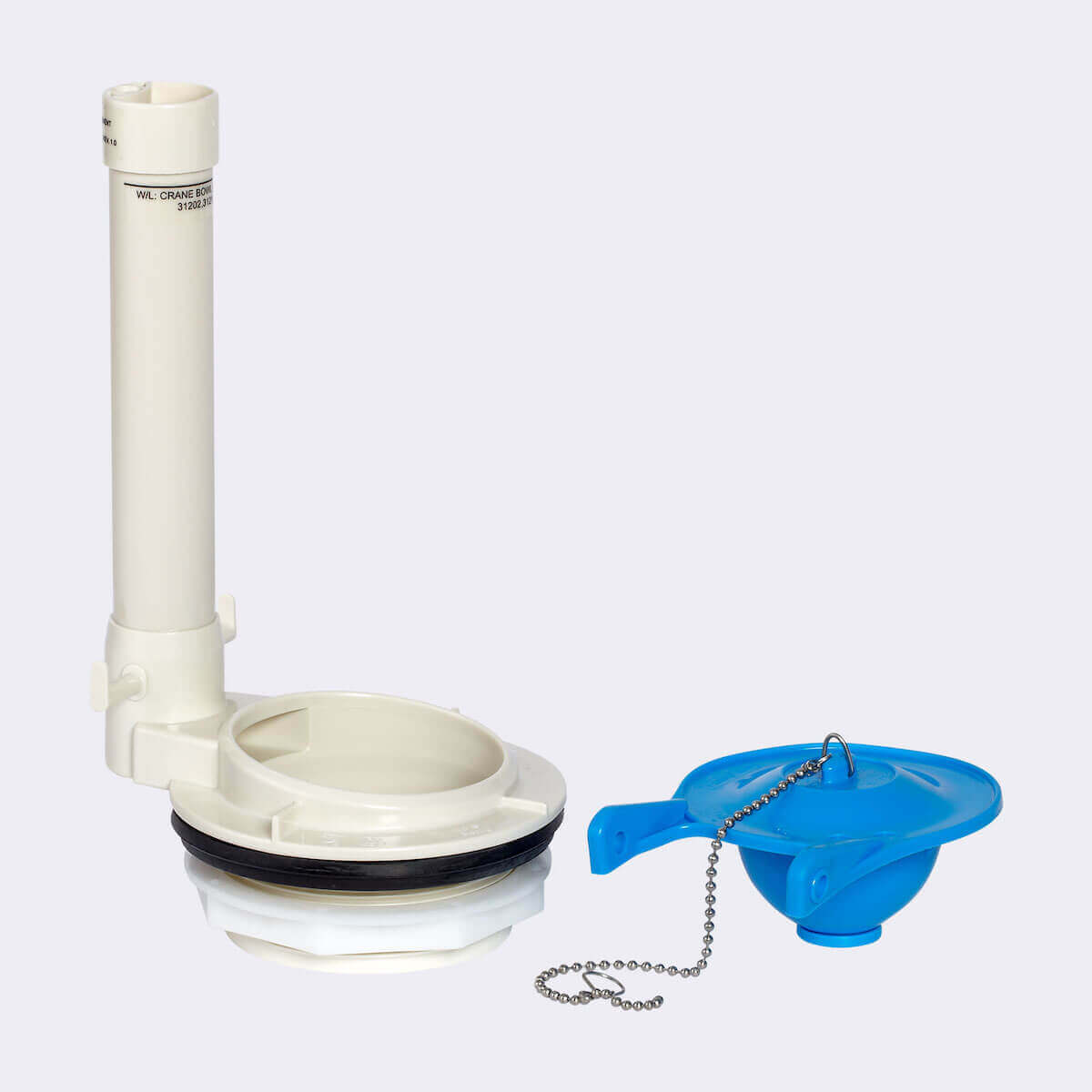
1) Flush Valve (diagram)
How a Toilet Flush Valve Works (Video)
The first step in repairing a toilet tank is to determine which parts are causing the problem. The fastest way to do this is to look for the vertical white plastic tube called an “Overflow tube,” standing upright in the tank.
The overflow tube is part of the Flush Valve mechanism and acts as a safety mechanism to prevent the tank from overfilling.
If you see water flowing into the Overflow Tube, the problem is with your Fill Valve (see details below), which is not shutting off properly. We’ll get to that in a minute.
However, if you find that the water hasn’t reached the top of the Flush Valve and is instead running out into your toilet bowl below, you may have a leaky Toilet Flapper (see details below)
With that in mind, let’s look at each toilet part specifically:
2) Toilet Flapper (diagram)
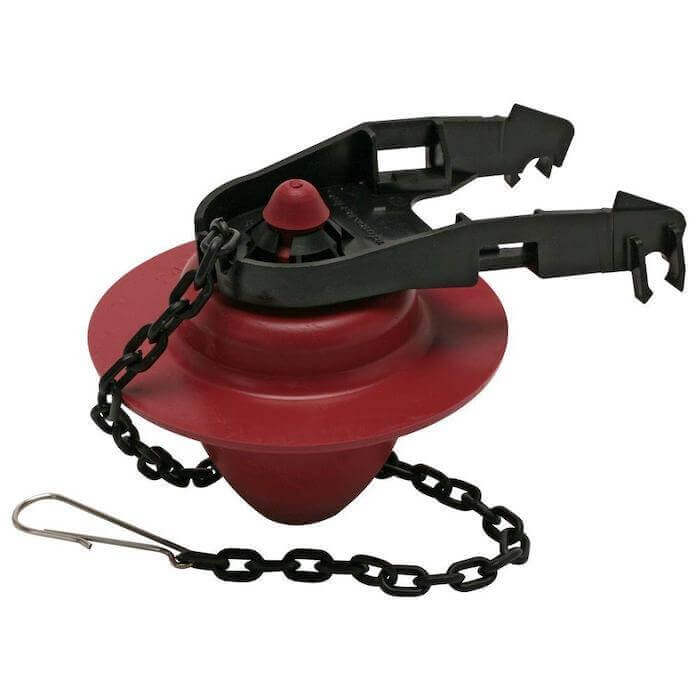
The #1 component that wears out in a toilet’s flush valve is a Flapper. The flapper is the rubber part connected to the flush valve that creates a seal between the toilet’s tank and bowl, allowing it to retain water until flushed.
If your toilet is running continuously and the culprit isn’t your fill valve, the flapper is likely the problem.
The easiest way to tell whether or not your flapper has gone bad is to press it down from inside the tank with your hand. If additional pressure closes off the tank and stops the toilet from running, the flapper probably needs to be replaced.
Like any other moving part, flappers wear out over time, eventually preventing them from sealing properly.
How To Replace Toilet Flapper:
You may not need to replace the toilet flapper. It may be dirty, and the toilet flapper won’t seal tightly if there is any lime, slime, or hard-water build-up where your old flapper seats meet the flapper seat on the flush valve.
Use a scouring pad to carefully remove any film or grime from the toilet flapper, and make sure the new flapper forms the best possible seal with the flush valve it contacts.
However, if your toilet flapper is worn out (hardened rubber, deformed), replace it with a new one. This is a very inexpensive toilet part.
To replace the toilet flapper, start by turning off the water to your toilet and draining the toilet tank. After this, you should be able to reach inside, grab the old toilet flapper, and carefully remove it by pulling it off the flush valve tabs that secure it on either side.
Next, detach the flapper from the chain that connects to the toilet handle.
To complete the toilet flapper installation, attach the new flapper to the flush valve tabs and reattach it to the toilet handle chain.
Next, turn the water back on and test the new flapper for leaks. It should seal properly and allow the toilet tank to refill quickly.
Note: If the chain between the toilet flapper and the handle arm is too loose or too tight, it will prevent the toilet flapper from seating correctly.
If the toilet flapper chain appears unusually loose or so tight that it prevents the flapper from sealing against the flush valve, adjust the chain’s length.
3) Toilet Fill Valve (diagram)
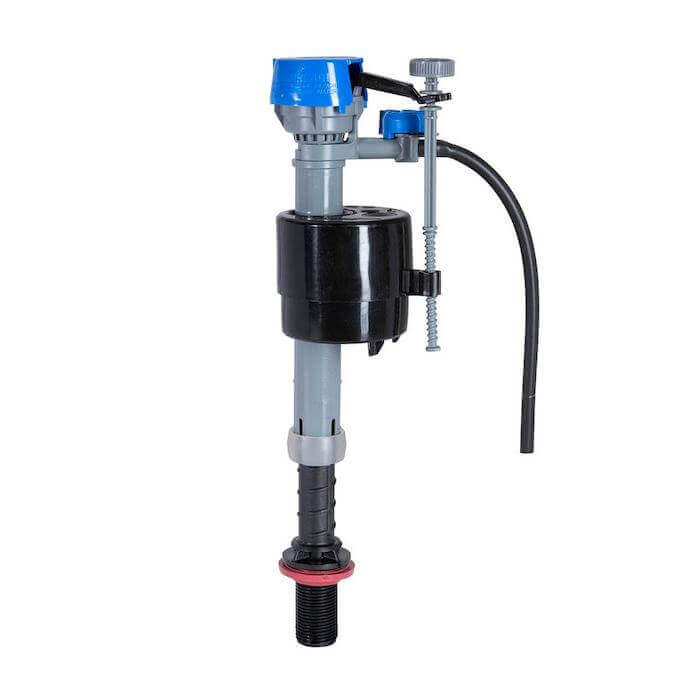
Suppose your toilet flush valve and flap are operating correctly, but your toilet is still running. Or, you may say, “My tank sprays water up when flushing — what part is that?”
Answer: The most likely issue is a misaligned or pinched refill tube, which can cause the fill valve to spray up. In that case, it’s most likely due to a problem with your Toilet Fill Valve—or perhaps an improperly set Toilet Float.
How A Toilet Fill Valve Works (Video)
Check that your Float is adjusted correctly to fix a toilet fill valve. Once you determine whether you have a float “ball” or a float “cup” (newer design), you can adjust it accordingly to raise or lower the toilet tank water level.
With a Float “Ball,” turn it clockwise to tighten it, allowing the Fill valve to add More Water to the toilet tank. Conversely, turning the Ball counterclockwise will “extend the ball” and allow less water into the tank.
With a Float “Cup,” use a Phillips screwdriver to adjust the +/— indicator forward or backward to raise or lower the toilet tank water level.
With either Float design, adjust the Float to allow the toilet tank water level to stop approximately 1″ below the top of the Overflow valve.
Additional Tips on Fixing Toilet Bowl “Float”:
If the water stops after temporarily lifting the float, the water level isn’t rising properly as it fills your tank. Many toilets will have a simple screw at the top of the valve assembly that can be used to adjust the float cup.
If your toilet doesn’t have this feature, slightly bend the float arm or gradually unscrew the float ball counterclockwise. This will adjust the float ball’s position in the tank, causing the water to shut off at the fill valve.
If the float isn’t the problem, inspect the toilet fill valve assembly to see if it’s been jammed by lime deposits in your water. If the fill valve is stuck, remove and clean it, or likely, replace it.
4) Toilet Fill Valve “Seal” (Washer)
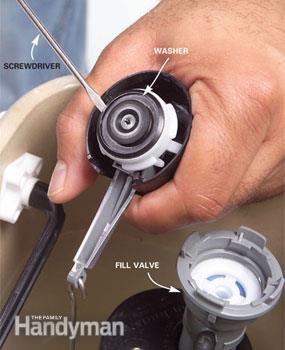
The small Fill Valve Seal/Washer inside the Fill Valve will wear out on rare occasions. This is a very inexpensive part and can easily be replaced. When the float stops, you will know this is the problem, but the toilet fill valve fills the tank with water.
How to Fix Toilet Fill Valve Seal/Washer
If you believe your toilet fill valve “washer” is worn out, remove the top cap of the Fill Valve and inspect the rubber washer on top.
If the fill valve washer appears cracked, unsealable, or worn out, replace it with an identical washer available at any hardware store. This could be a straightforward, inexpensive fix to stop your fill valve from running continuously.
Note: If all remedies fail to fix the toilet fill valve, you can remove the entire fill valve assembly by removing the bottom nut holding it to the tank, then replace it with a new one.
This solution is a bit more labor-intensive than the others, but it will fix any issues with a fill valve.
If you aren’t sure what kind of replacement valve you need, bring the old valve assembly to the hardware store so a plumbing representative can help you find an adequate replacement.
Note: If you are not into “Troubleshooting” every toilet part and want to go the safe route, replace all the toilet parts at once. Use the list below to pick up all the toilet replacement parts you’ll need.
I recommend taking the existing Toilet Fill Valve, Flush Valve, and Flapper to the Hardware Store to compare them with the new toilet parts.
Complete List of Toilet Tank” Parts:
- Fill Valve Assembly
- Flush Valve assembly
- Flapper (if not included with flush valve assembly)
- Toilet Handle, chain, and retaining nut (only if necessary)
- Note: Make sure to replace toilet parts that will fit your toilet – Ask an expert if you’re unsure.
Toilet Tank Fill Valve Designs:
We’ve included a Toilet Parts Diagram below for a more “Detailed Look” at the different Toilet Tank Fill Valve Designs you may find in your home.
These toilet part diagrams show the two different types of toilet fill valves, including the Newer “Float Cup” design (invented in the 1950s) and the older “Ball Cock” toilet fill valve design.
When replacing your fill valve, most people will replace their existing ball cock design with the modern “float cup” toilet filler valve – (ball cock fill valves are not considered applicable).
“Float Cup” Fill Valve Toilet Tank – Installed in modern toilets and for use when replacing newer toilet tank parts:

The Toilet Tank Diagram below shows an “older” “Ballcock” fill valve design—with a “Float Ball”—which is hardly ever manufactured anymore.
If you have an older home, it may have this toilet float design. We recommend replacing the Ballcock design with a Float Cup toilet fill valve design.

“Toilet Bowl” Parts:
Once you get past the Toilet Tank parts, the Toilet Bowl parts are more straightforward and quicker to repair.
“Toilet Bowl” Parts Include:
- Porcelain Toilet bowl
- Toilet Seat
- Wax Ring (The Seal below the toilet bowl) with Floor Bolts included
- Toilet Floor Flange
The entire principle of toilet operation is quite simple. From the Toilet bowl, water is flushed down a bent flow in the toilet bowl casting. The toilet tank has been refilled and is ready to complete the process again.
The Toilet Bowl seals with a Wax Ring on top of the PVC Floor Flange, with the main waste line beneath it. Ensure you position the Floor Bolts shown below at the same time as the new wax ring before setting the toilet back in place.
Standard Toilet Bowl (Image)

How to Replace a Toilet
If you’ve decided to replace your entire toilet, not just a few toilet parts, don’t worry – it’s not as difficult as you might think.
Check out this video from This Old House on “How to Change a Toilet.”
Now that you understand how the basic components of a toilet work, you will be able to quickly identify which parts have gone bad and repair or replace them.
If your toilet overflows, grab your wet/dry shop vacuum to clean it up quickly.
How To Replace a Toilet Seat
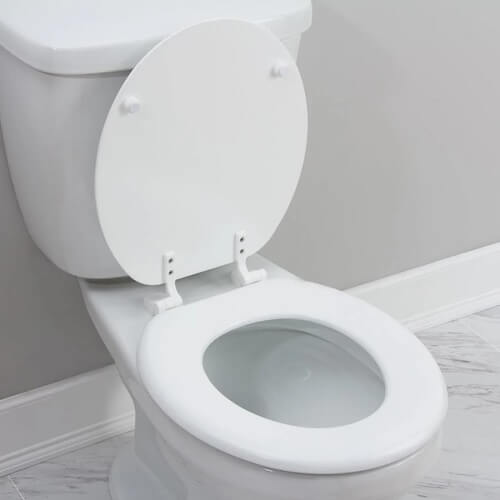
Replacing a toilet seat is one of the most uncomplicated DIY repairs. Toilet seats are available in two shapes (Oval or Round), sizes, and materials (plastic or wood), but all toilet seats attach to the toilet bowl using the same method: two toilet bolts.
Today’s most popular toilet seat is the Oblong, Plastic, Self-Closing toilet seat. Measure your toilet bowl, determine the shape, and choose the seat that best matches your toilet bowl size, preferences, and budget.
To Replace a Toilet Seat – begin by removing the existing toilet seat. To do this, start by gripping one of the two bolts under the toilet seat with pliers and turning the top screw counter-clockwise.
Repeat by removing the second toilet seat bolt and screw, then remove and discard the old toilet seat.
To install a new toilet seat, set it in place, then install two new bolts and screws, and secure it tightly.
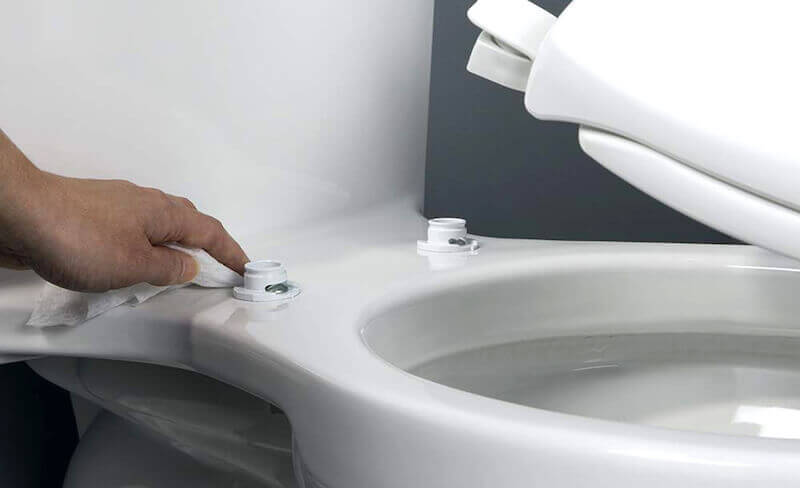
Note: Most Modern toilet seats now use a toilet bolt design, with snap-on (flip-up with a flat-head screwdriver) or twist-on bolt covers (no tools) that conceal the toilet seat bolts.
A much more sanitary design vs. exposed toilet seat bolts.
The Toilet “Floor Flange”
The Toilet Floor Flange (shown below) is connected to your Toilet by way of the Wax Ring (shown above)
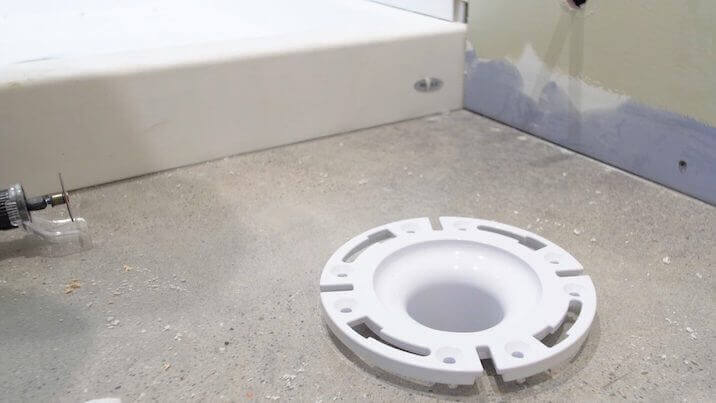
Together, these “Toilet floor parts” create a completely waterproof seal between the toilet and the drain pipe that carries water and waste away, preventing leaks onto the floor.
If water seeps from your toilet and pools at the bottom, the problem is the almost inevitable failure of the wax ring. Purchase a “Universal Toilet Bowl Wax Ring” that works with 99% of modern toilets.
Toilet Bowl Wax Ring (Image)
Whether you’re looking at American Standard Toilet Parts or other manufacturers, A typical wax ring toilet repair kit will include the wax ring, flange anchors, nuts, and washers.

How To “Replace Toilet Bowl Wax Ring”
Many homeowners panic when they see used toilet water seeping from under the toilet during flushes, but don’t worry; this simple fix doesn’t require a toilet plumbing diagram.
In reality, this is a more common repair than you realize. The issue is simple: the toilet repair is less than $5.00 and easy for most homeowners by following these ten steps:
1) Turn off the water supply to the toilet.
2) Disconnect the water supply line near the rear base of the toilet.
3) Remove the floor anchor Nuts that connect to the bolts at the base of the toilet
4) Empty the water from the toilet bowl – as much as possible.
5) Lift the toilet straight up, remove it, and set it aside.
6) Remove the old wax ring. Clean thoroughly, scrape, and remove all remaining residue.
If you see any damage to the PVC flange (mounted to the floor), remove and replace the floor flange to match the size of your drain pipe (this type of damage is very uncommon).
7) Hint: It’s a good idea to install the New toilet anchor bolts with washers (which are included with the new wax ring) on the toilet flange (illustration above) in the same toilet flange slots as the original bolts.
8) Gently position the New Wax Ring (the flat side is down) and center it on top of the PVC flange (on the floor).
8) Position toilet bowl bolts in place and carefully set the toilet on top of the new wax ring, allowing the toilet bolts to slide through the bottom side of the bathroom.
Important: Be careful not to over-manipulate the wax ring when setting it on top of the flange, as bending it may prevent it from forming a complete, tight seal.
9) Use a hacksaw to cut toilet anchor bolts for length (some are snap-away bolts – if so, use pliers to snap them off to the proper size)
10) Reconnect the water supply and check for leaks at the toilet bowl’s base.
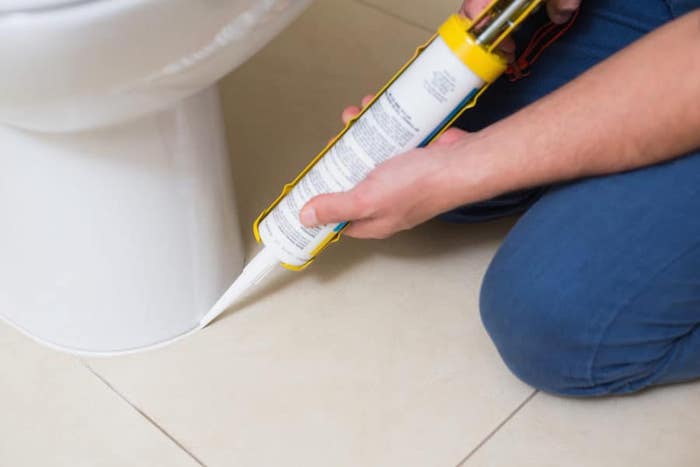
11). Highly Suggested: Waterproof your Toilet bowl. To do this, apply a thin bead of clear or white caulk around the toilet bowl that meets the flooring. Use Outdoor/Silicone caulk for this waterproof application.
This step is especially essential for toilets or bathrooms on upper floors that sit above finished living spaces.
This step should keep toilet overflows contained without damaging lower-floor ceilings, and it is one of the best preventive steps you’ll ever take for your home.
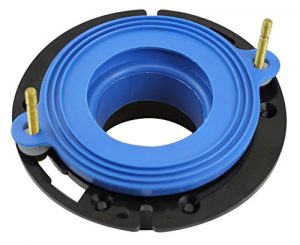
FYI: In the last few years, Fluidmaster has developed a “Wax-Free” toilet seal, which has become popular and will last longer while costing slightly more than typical toilet bowl wax rings. You can order a wax-free toilet ring (illustration below).
Alternate Wax Ring Install Method: “New” Toilet Installation:
Note: If you’re installing a new toilet, the preferred method for installing a wax ring is to mount it to the underside of the bathroom before seating the entire toilet bowl to the PVC toilet flange on the floor. This method is illustrated below:

Here’s Another Good DIY article we wrote For Homeowners – How to Wire a 3-way Light Switch
Frequently Asked Questions (FAQ)
Q: What are the best safety precautions to know before fixing my toilet?
A: The three most important things to know for DIY toilet repair, before you start, are:
-
How to shut off the water supply
-
Make sure you avoid damage to the porcelain tank or bowl.
-
Realizing when your abilities don’t match the toilet repairs needed, and knowing when to call a plumber
Q: What are the Most Common Toilet Tank Problems?
A: Common Toilet Tank Problems and the Parts That Cause Them
If your toilet isn’t working correctly, the issue is usually linked to a specific tank component. Here’s how to match common symptoms with the most likely problem part:
-
The toilet keeps running after flushing
Likely cause: Worn flapper or improperly adjusted fill valve
Solution: Clean or replace the flapper; adjust float height -
Weak or incomplete flush
Likely cause: Low water level in the toilet tank
Solution: Raise the float or adjust the fill valve -
The toilet tank won’t refill after flushing
Likely cause: Faulty fill valve
Solution: Replace the fill valve assembly -
Water is leaking into the bowl without flushing
Likely cause: Flapper not sealing properly
Solution: Replace the flapper or clean the fill valve seat (washer)
This troubleshooting approach helps you identify the problem quickly without guessing or replacing unnecessary parts.
Q: What are the Parts of a Toilet Called?
A: The two main parts of a Toilet are the Toilet Bowl and the Toilet Tank. These parts contain the mechanisms that keep a toilet running properly.
Q: What causes toilets to run after flushing?
A: A toilet will continue to run after flushing for two most likely reasons;
1) The water level is set too high, causing water to drain into the overflow pipe of the drain valve. (Adjust the water level by resetting the float.
2) The toilet flapper is old or worn out (Replace the toilet flapper).
Q: Is it Hard to Replace Toilet Tank Parts?
A: Every Toilet Tank Part is designed for easy replacement. Replacing Toilet Tank Parts is relatively simple for most homeowners with average DIY skills.
Once you gather the right tools and have a Toilet Diagram to identify toilet parts, you can assess which parts are leaking or aren’t working correctly.
Q: What Tools Do I Need To Fix a Toilet?
A: Toilets are relatively easy to work on and don’t require anything not found in a standard home tool kit. Toilet Repair Tools you need include:
- Adjustable wrench
- 4- In -1 Screwdriver
- Pliers
- Vice Grips
- Hacksaw (if you’re installing new flange bolts – That do not have EZ snap-off marks)
- Shallow Water Bucket – To catch toilet tank water.
- Soft towel or Sponge for the cleanup
Q: What Is a Toilet Diagram?
A: A Toilet Diagram illustrates all the parts of a Toilet. The diagram includes Toilet Tank Parts (parts that make a toilet flush) and a diagram for Toilet Bowl Parts.
Q: Where Can I Find a Toilet Diagram?
A: See our article at Best Home Gear: “Parts of a Toilet – Toilet Tank Diagram” – to view a complete Toilet Diagram including Toilet Tank and Toilet Bowl Parts.
Q: How Do You Replace a Toilet Bowl Wax Ring?
A: You can replace a toilet bowl wax ring in 4 simple steps. 1) Turn off the water supply to the toilet, 2) Remove the water supply line, 3) Remove the toilet bowl, and 4) Replace the wax ring.
Q: How Do You Replace a Toilet Seat?
A: To replace a toilet seat, you first need to expose the bolts holding it to the toilet bowl. Lift any tabs covering the (2) toilet seat bolts, and turn the toilet seat bolts counterclockwise (left) to loosen them.
You may need pliers to hold the nut below the toilet bowl while removing the bolts. Reverse this process to install a new toilet seat.
Kevin’s Final Recommendations
If your toilet is running, leaking, or flushing poorly, don’t default to calling a plumber before taking a 60-second look inside the tank.
The flapper is the most common failure point in any toilet — it costs less than $10, installs in under five minutes, and solves the majority of running toilet complaints.
If the flapper isn’t the issue, the fill valve is the next most likely culprit, and a complete universal replacement still runs under $20.
For water pooling at the toilet base, a new wax ring is your answer — and it’s a repair that’s well within the reach of any homeowner willing to follow the steps in this guide.
My professional recommendation: keep a spare flapper on hand in every bathroom. They’re cheap, they fit almost any toilet, and having one available means you can fix a running toilet the moment you notice it — before it wastes thousands of gallons or causes floor damage.
If you found this guide helpful, bookmark it for future reference and share it with a family member or neighbor who is dealing with a toilet problem. A little knowledge here saves a lot of money.
Additional Reading & Resources:
- How to Remove Hard Water Stains From Your Toilet
- How To Remove a Dishwasher (Before New One Arrives!) – BestHomeGear.com
- How To Replace a Lavatory Faucet
- How To Connect Rain Barrels and Save Water – Besthomegear.com
- How To Get Rid Of Ants Permanently – Besthomegear.com
- How do you clean and change your Lawn Mower spark plug? – BestHomeGear.com




Even if I do a lot work on toilets in general this installation guide lines are very useful and there’s hardly anything more to say about it !
One little thing I learned from my experience with toilets, all ways have a large sponge and a knee pad with you and a towel so that’s is all I tell you the rest is up to you ! Lol
Thanks for the comment, Wolf. I’m glad the article was a good reference for you. I also appreciate your suggestion on cleanup tools; otherwise, a normally simple job can get pretty wet!
Kevin