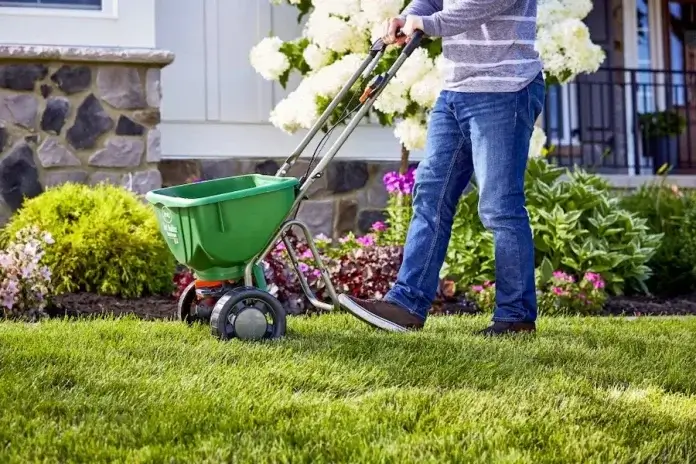

A healthy, green lawn is the envy of the neighborhood. But what is the best time to fertilize your lawn, for the region you live in? To keep your lawn looking its best, you need to do more than mow and water—you also need to know when to fertilize it, and we can help.
Fertilizer provides the nutrients that your grass needs to grow strong and healthy. It also helps to prevent weeds and diseases. However, not all fertilizers are created equal. Some are better suited for certain times of the year than others.
For homeowners who are unfamiliar with when and how to fertilize their lawns, here is a simple “Four-Season Lawn Treatment plan” to follow;
Seasonal Lawn Fertilizer Plan for Homeowners (DIY)

Lawn Care Treatment in Early Spring
In Early Spring, apply a “Pre-emergent” Weed preventer, such as a Pre-Emergent Crabgrass and Weed killer, ensuring the ground has reached 55 degrees or warmer. If it is colder, the treatment will not be effective.
Lawn Tips for Spring
In the spring, your lawn is just starting to wake up from its winter slumber. Now is the time to give it a nutrient boost to help it grow strong and healthy. A good spring fertilizer will contain a high level of nitrogen.
When buying a fertilizer high in Nitrogen, look for the “N” level percentage; this will help your grass grow quickly and fill any bare spots. Most fertilizers labeled as Weed & Feed are suitable for Spring applications.
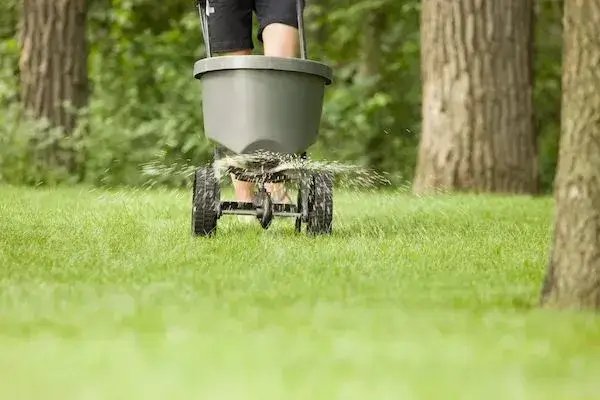
Best Lawn Fertilizer for Summer
Summer is a time of growth for your lawn. It will need regular fertilization to keep up with the demands of the heat and sun.
A good summer fertilizer like Scotts Summerguard will contain a balanced blend of nitrogen, phosphorus, and potassium. This will help your grass stay green and healthy all summer long.
Best Lawn Care in Fall
As the days get shorter and the nights get longer, your lawn will slow its growth. But it’s still essential to fertilize it in the fall. A good fall fertilizer, such as Scotts Winterguard, will contain a high level of potassium.
This will help your grass prepare for the winter by strengthening its roots and making it more disease-resistant.
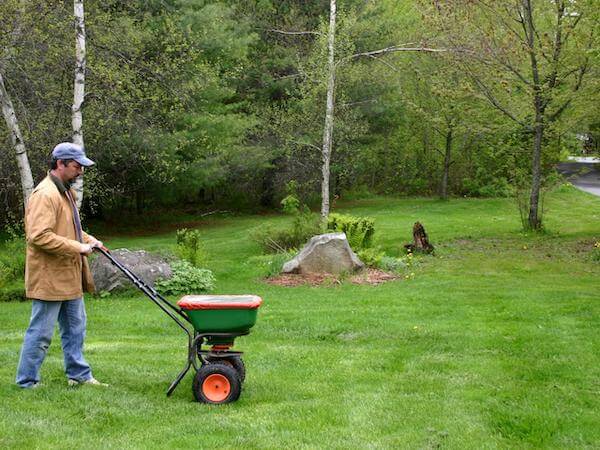
Winter
In the winter, your lawn will go dormant. It will need very little fertilizer during this time. But if you live in an area with harsh winters, you may want to apply a light fertilizer in the early spring to help your lawn recover from the cold.
This seasonal lawn fertilizer program will keep your lawn looking its best all year.
What Do Those Fertilizer Numbers Mean?
First, it helps to understand the Fertilizer Designations on each bag so that when buying fertilizer, you will know which formula to purchase – and when to apply it to your lawn.
There are three main elements in lawn fertilizer: nitrogen, Potassium, and Phosphorus. Below is a photo of how the Fertilizer Elements (by percentage) appear on the bag:
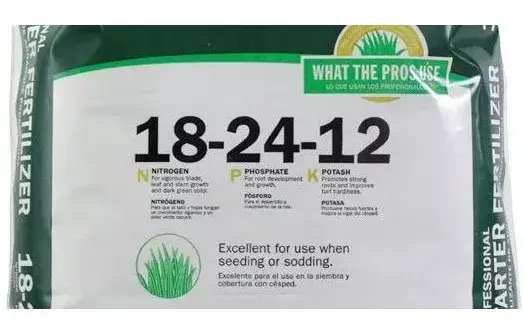
These element symbols are N (Nitrogen), P (phosphorus), and K (Potassium or Potash), and the percentage of each element will always be listed on the fertilizer bag in this same order. N-P-K.
The numbers printed on the fertilizer bag above, for example (5-10-10), indicate percentages of 5% Nitrogen (makes the lawn green), 10% phosphorus (builds healthy roots), and 10% Potassium (maintains strong roots and prevents stress).
Knowing the elements indicated for each fertilizer, you can select the best fertilizer for each season.
Note: Check out Scotts’ package below if you prefer to buy a lawn care fertilizer plan without wading through the fertilizer elements for each season.
Best Four-Season Package: Scotts Lawn Care Plan
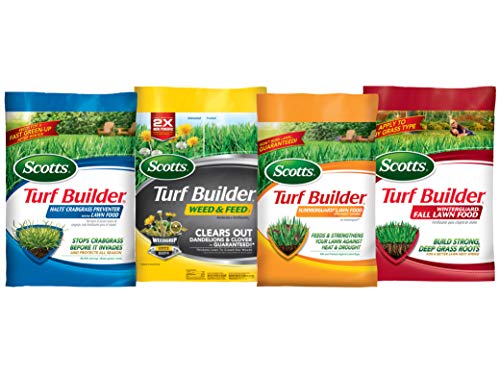
With Scott’s Four Season Lawn Care Plan, you will apply pre-measured N-P-K ingredients in Early Spring Pre-Emergent Weed Control, Spring Weed and feed, Summer Summerguard, and Fall Winterguard applications.
NOTE: Be sure to wait until the ground temperature is maintained at 55 degrees or warmer before applying fertilizer.
Additional Tips for Fertilizing Your Lawn:
* Choose a fertilizer that is appropriate for your grass type. Northern Grasses, such as Kentucky blue, Fescue, or rye, vs. Bermuda or Zoysia Grass in warm Southern Climates.
* Apply the fertilizer according to the directions on the label, and never fertilize with ground temperatures below 55 degrees.
* Water your lawn thoroughly after fertilizing.
* Avoid fertilizing your lawn on windy days.
* Don’t fertilize your lawn if it’s been recently mowed.
Following these tips, you can safely and effectively fertilize your lawn and keep it looking its best.
Frequently Asked Questions (FAQ)
When is the Best Time To Fertilize a Lawn?
The best time to fertilize your lawn is “while it is growing.” No matter what type of grass you have, lawns require nutrients most during this stage.
Apply fertilizer in the spring and fall for northern cool-climate grasses, and in late spring or early summer for warm-climate grasses.
What is the “Best Way” to Apply Lawn Fertilizer?
The two Best Ways to apply lawn fertilizer are to use a “Broadcast spreader” or a “Drop spreader” application.
Method #1: Broadcast Fertilizer Spreader
A broadcast spreader is the most common method of applying fertilizer to your lawn. To broadcast apply fertilizer, you need a broadcast spreader, which projects fertilizer with a fan wheel, distributing fertilizer in a broad path up to 10 Feet wide.
Broadcast spreaders come in various sizes so that you can choose the right size for your lawn.
Our top-rated broadcast spreader is the Scott’s Elite Spreader, which can hold up to 20,000 square feet of lawn fertilizer.
To use a broadcast spreader, fill it with fertilizer and walk back and forth across your lawn, overlapping each pass by about 50%. This will ensure that the fertilizer is evenly distributed.
Method #2: Drop Application Fertilizer Spreader
A Drop fertilizer application is a more precise method of applying fertilizer, usually preferred by those with smaller lawns.
A drop spreader feeds fertilizer directly to the lawn below it, whereas a wide-path broadcast spreader may not be suitable for small or sectioned-off lawns.
Drop spreaders come in various sizes and styles, and again, you choose the right size for your lawn. If you prefer to buy a drop spreader, we like the no-nonsense Miracle-Gro drop spreader.
Fill a drop spreader with fertilizer and walk back and forth across your lawn, placing the fertilizer directly on the grass. This method is best for small lawns with many obstacles, such as trees or shrubs.
No matter which method you choose, it is essential to carefully read the instructions on the fertilizer label. This will ensure that you are applying the correct amount of fertilizer safely.
What Mistakes Should Be Avoided When Applying Fertilizer?
Mistake #1: Over-fertilizing is the most common mistake people make when applying lawn fertilizer. Too much fertilizer can damage your lawn, making it more susceptible to weeds and pests.
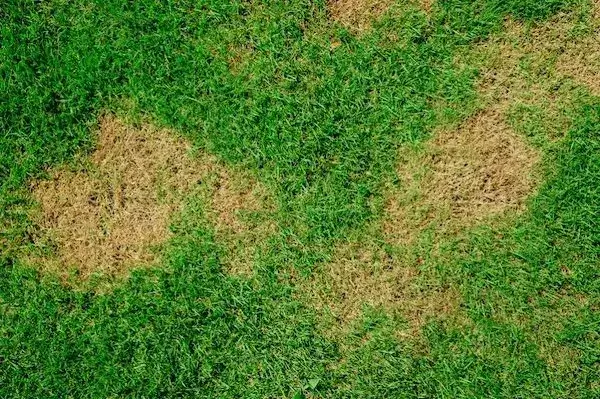
Mistake #2: Applying fertilizer on a windy day can blow the fertilizer away, resulting in uneven application.
Mistake #3: Applying fertilizer on a hot day can scorch the grass.
Mistake #4: Not watering your lawn after applying fertilizer can prevent the grass from absorbing the fertilizer.
Mistake #5: Not wearing gloves and eye protection when handling fertilizer can irritate skin and eyes.
By avoiding these mistakes, you can ensure your lawn gets the nutrients it needs without damaging it.
Please leave us a Google Review: Your feedback helps us grow and lets other homeowners discover our site. Click Here to share your thoughts on Google!
References & Further Reading:
- Proper Aeration of Turf Grass – PennStateUniversity.edu
- Improving Soil Conditions – MichiganStateUniversity.edu
- Check out why you should aerate your dry lawn here- Gardenersworld.com