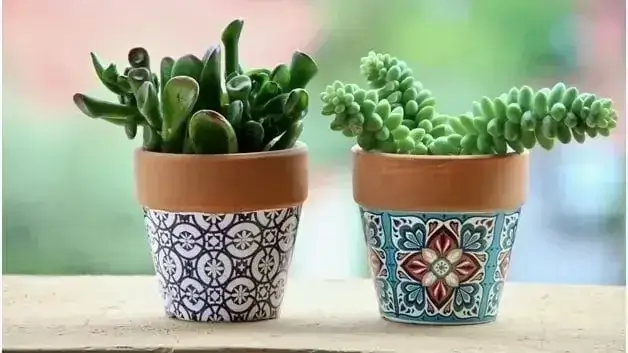

Are you wondering How to care for Cacti and Succulents? You’ve seen the pictures on Pinterest and love the arrangements, but you think, “I’ve never owned any of these plants.” How will I know how to care for a cactus indoors?
Growing cacti and succulents indoors is the perfect place to start for beginning gardeners. These hardy plants will thrive with proper cacti care and generally require minimal maintenance.
Cacti and succulents are beautiful spiny plants that are very hardy, so a little neglect will not kill them. They can be grown outdoors or indoors, which is ideal for those in non-warm climates.
If you’re thinking of adding a cactus or succulents to your home garden, here are some simple guidelines and tips on correctly caring for cacti and succulents.
Need some Privacy? Check out the fastest-growing evergreen shrubs for privacy hedges!
How to Grow Cactus and Succulents Indoors
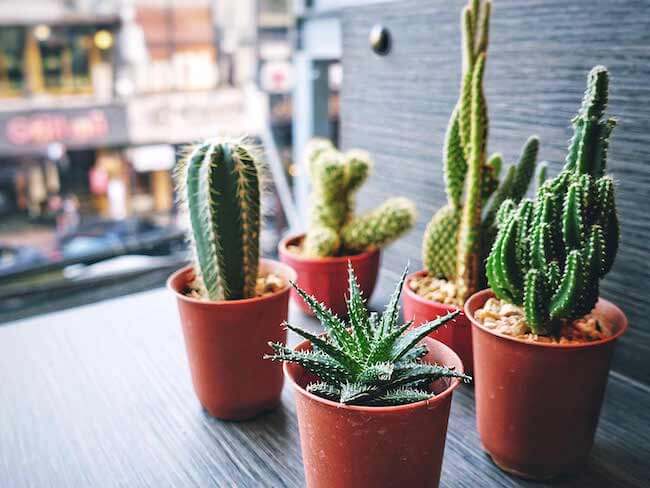
Because of the considerations below, indoor environments are the “ideal” locations for cacti and succulent care.
You have much more control over extreme shifts in heat/cold, dry/humid, and light/shade, and, therefore, less concern about growing these beautiful plants.
Choosing the perfect plant
When planning to purchase a new plant, whether a cactus or succulent, for your home or yard, you want to consider where you will put it. This will help determine which plant will thrive best in that “Space.”
So, after reading through this article, get some plants and grow!
Prepare ahead of buying Cactus:
Is the room or garden too humid or too cold? Is there enough space for the plant to grow? How big will the cactus or succulent get? Does the room or yard have sufficient light?
Before purchasing a cactus or succulent, stand in the room or observe your garden several times throughout the day. This will help you determine how many hours of direct sunlight the plant will receive.
Once you know what you want, it is essential to read the plant’s care label at the store. You can also ask the retail staff any questions about cactus care.
No one wants to come home and discover that what they thought was the perfect spot resulted in a dead or dying cactus or succulent.
Do cacti and succulents need sunlight?
Cacti and succulents love the light, but not too much. Different cacti and succulents need various quantities of light, but typically, they all need plenty of sunlight, not necessarily 12 hours of direct sunlight.
It is best to place them near a south— or east-facing window, where they will get multiple hours of daylight—usually 4-6 hours daily.
When picking cactus plants or succulents to grow indoors, look for ones that don’t need much light.
Succulents with bright colors need more light to thrive in a garden or outside in temperate weather. Green succulents are better suited for indoor growing.
Plants that receive optimal light will flower. Not all cacti and succulents like direct sunlight, as they can become scorched.
You can tell if a plant is getting too much sun if the foliage or branches are losing their pigmentation, or, in other words, if they are becoming bleached out.
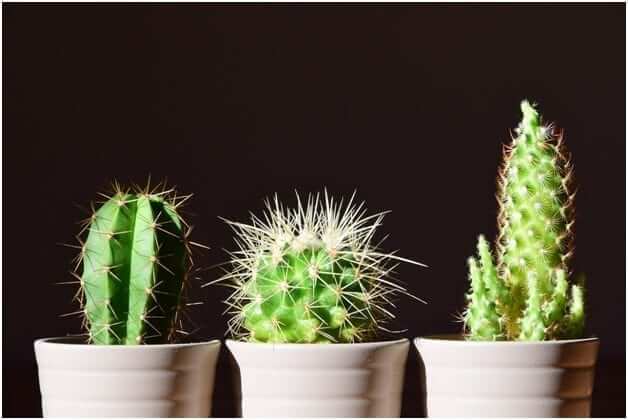
If the plant gets too little sun, the succulent or cactus will be drawn towards the light, almost as if the branches are reaching for it.
If you notice your plant leaning toward the morning, rotate the pot so that different parts of the plant receive sunlight.
If you have trouble finding sufficient light, you can supplement the lack of light with a grow light.
If you notice any of these signs, whether too much or too little sun, you can move the plant to get the perfect amount of sunlight to grow.
What temperature is best for cactus plants and succulents?
Cactus plants and succulents prefer a dry and warm climate
However, you do not want to expose them to extreme heat. If your cactus or succulents are planted outside, you must provide shade to protect them.
You can do this with a cotton sheet, umbrella, or burlap. If the temperature is too low, cacti and succulents will rot.
Many ask, “How do you take care of succulents indoors?” Well, for many reasons, including temperature extremes, excess sunlight, and humidity, it is easier to grow succulents “indoors.”
The Best Types Of Pots for Cactus and Succulents
When picking the perfect spot, choose a pot that allows the soil to dry quickly and prevents the roots from rotting.
You will want to provide at least one hole at the pot’s base for sufficient drainage. The size and breathability of the pool must also be considered.
Breathable pots, like clay, terracotta, or ceramic, are best, but any bank will work well. Unglazed clay or ceramic is best, but plastic pots are also acceptable.
Clay and ceramic pots are heavy, providing stability for more enormous cacti that are heavy with water.
Clay and ceramic pots are breathable, allowing the soil to dry evenly. Plastic pots are light, easy to move, and clean. The pot style you choose should be determined by the type of succulent or cactus you purchased.
If you find a pot you love but it doesn’t have a hole in the bottom for drainage, you can consider drilling one. You can also place mesh tape above the hole to prevent soil.
You will need a drill bit, carbide, or ceramic, to add drainage holes. One to two holes are usually adequate for small pots.
Apply firm pressure straight down, but do not push too hard, which may cause the pot’s base to crack or shatter.
Practice makes perfect, so practice drilling holes a few times on small pieces of clay or ceramic first.
Video: How do you transplant a cactus (Without getting poked)?
Avoid Glass pots for Cactus and Succulents.
Although they look pretty, succulents do not like glass pots because they are non-breathable and lack drainage. It is best to avoid them and choose plastic, or better yet, clay or ceramic.
When considering the pot size, you want it big enough to accommodate growth but not too big. If the pot is too big, it will prevent the succulent from growing to its full potential. The roots will spread out before the succulent has time to catch up.
The roots and plant will need about 1/2 an inch of space to grow. If your succulent is about 1 inch, plant it in a pot about 2 inches wide.
You must keep that in mind if you want to add more succulents. Some cacti have roots that will grow near the surface, so a tall, narrow pot would not be a good choice.
Plants that receive optimal light will flower. Not all cacti and succulents like direct sunlight, as it can scorch them.
You can tell if a plant is getting too much sun if the foliage or branches are losing their pigmentation, or, in other words, if they are becoming bleached out.
We’ve all seen those beautiful potted succulent plants on Pinterest. The different shapes and colors intertwine together. Here are a few guidelines for caring for succulents so you, too, can grow beautiful ones.
Growing multiple succulents in one pot requires a delicate balance. If you plant succulents close together, they will grow more slowly, creating an exotic arrangement.
However, watering becomes more complex because it is harder for water to reach the soil.
If the water pools over the edge of the pot, the leaves will rot. The more space between plants, the easier it is to water. Typically, 1/2 an inch between fully grown plants allows easy watering and proper growth.
Can I grow Multiple Succulents in one pot?
We’ve all seen those beautiful potted succulent plants on Pinterest. The different shapes and colors intertwine together. Here are a few guidelines for caring for succulents so you, too, can grow beautiful ones.
There is a delicate balance to growing multiple succulents in one pot.
If you plant succulents close together, they will grow more slowly, creating an exotic arrangement. However, it will become more difficult to water them, as the water will be more challenging to reach the soil.
If the water pools over the edge of the pot, the leaves will rot. The more space between plants, the easier it is to water. Typically, 1/2 an inch between fully grown plants allows easy watering and proper growth.
Check out the eight best folding wagons on Amazon if you need a folding utility wagon around the garden.
What are the Best Types of Large Cactus to buy?
It is estimated that there are about 2,000 varieties of cacti worldwide, making them highly sought after and even “collectible” to many people.
The Mighty Giant Saguaro Cactus
The Giant Saguaro Cactus – Hailed as the largest in the Cactus family, it can grow up to 75 feet tall and live for up to 200 years. (I don’t think they make a pot big enough to hold this one)

While most Succulents are inexpensive, cacti such as the Giant Saguaro—found only in the Sonoran Desert of Arizona, most of Baja California, and half the state of Sonora, Mexico—can be pretty costly.
Because of their slow growth rate of about one foot every ten years, Saguaro Cactus are generally the most expensive cactus you can buy. The older Giant Saguaro pictured above is pretty scarce, which can restrict its sale in many parts of the U.S.
How expensive, you ask? You’ll likely pay as much as $100/foot or more for a giant Saguaro.
Because of their weight of 100 lbs/foot and prickly spines, cacti are generally left to professionals to install, which adds to the overall purchase.
So a 7-foot cactus at $700 or more, plus labor to install it at $100-$200, will set you back close to a grand!
Fun fact: Saguaro Cacti don’t grow their first “arm” until they are approximately 70 years old, about 7 feet tall!
Frequently Asked Questions (FAQ) Growing Cactus
Does it Matter What Type of Soil I Use for Cactus?
The right type of Cactus soil is vital for healthy growth. Pre-mixed soil for cacti and succulents can be purchased at landscape and garden stores. However, you can also make your own.
The soil must be coarse and sandy; mixing houseplant soil with sand is an easy way to create cactus potting soil.
The soil must allow for quick drainage. You don’t want the roots to become too saturated with water, as this can cause them to rot.
You should also add fertilizer each time you water, during the growing period of cacti and succulents. You don’t need to add fertilizer during the dormant period.
How Much Water Do Cactus and Succulents Need?
Like sunlight, the amount of water a cactus or succulent needs is critical. Make sure you read the plant care label carefully. It is best to check your plants weekly, but most cactus and succulents need water only once every few weeks.
If the soil is dry, add enough water to saturate it, but do not overfill the pot. If the soil is damp, you can wait a little while before watering again. The worst thing you can do is over-water.
Allow the soil to dry between waterings. If the succulents’ leaves are drying out but the soil is still moist, a misting bottle can be used to keep the tops moist between waterings.
Cactus and Succulents require more water during their blooming period, April to September, and less water during their dormant period, September to April.
Therefore, it is vital to fertilize your cactus or succulent at least once a year during the blooming season.
The great thing about succulents is that once they grow, you can cut off the tops and replant them in new pots to create unique arrangements. You can design different layouts and give them as gifts.
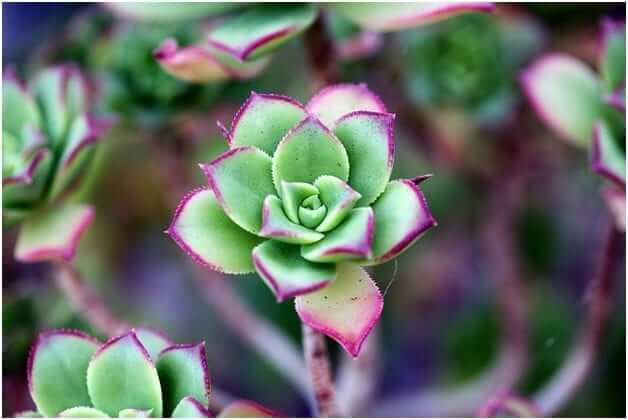
Do You Need To Re-pot Cactus?
Cacti and succulents should be repotted nearly every year. Replanting cacti can be tricky. Here are some tips to help you through this prickly task.
You will want to prepare the new pot in advance. Make sure the pot is big enough to accommodate further growth. You don’t want to have to re-pot in a few months. Add half the soil and sand, ensuring adequate drainage.
You must wear heavy-duty gardening gloves when dealing with a particularly prickly cactus. You can wrap the cactus with newspaper, a paper towel, or foam to protect your arms from the quills.
Tilt the pot to one side and pull it away from the plant. If you are having trouble getting the cactus out, tap the pot to loosen it, or break it if you are not planning to reuse it for another plant.
Dust away the soil and inspect for insects and rot.
Place the cactus in the new pot and add fertilizer, soil, sand, and water. Replanting is essential in cactus plant care. It also allows you to inspect the cactus for rot and pests.
How Do You Remove Bugs on Cactus?
Like any other plant, succulents and plants get pests. Two prevalent pests to watch out for are gnats and mealybugs. Gnats can infest when the soil is too wet, giving you another reason to avoid overwatering.
The easiest way to get rid of them is to re-pot the plant. Dust off the gnats and allow the soil to dry. To get rid of mealybugs, spray them with rubbing alcohol.
Although it may seem like a lot of work to grow cacti and succulents, once you have done the base work, they are easy to grow and enjoy. Most of the work is done when you plant them, and then once a year when you need to re-pot.
You can admire your cactus plant and succulents as they grow and flourish the rest of the year. You will not have to worry about your cactus or succulent if you go away on vacation for a week. Growing cacti and succulents is a great hobby. If you enjoy it, the possibilities are endless.
Please leave us a Google Review. Your feedback helps us grow and lets other homeowners discover our site. Click Here to share your thoughts on Google!
References & Further Reading:
- Citronella Plant Guide – From Garden Myths – GardenMyths.com
- How To Remove Mold From Drywall or Wood – Besthomegear.com
- Grow Your Own Mosquito Repellent Plant Garden – Prevention.com
- How long does grass seed take to grow fully? – BestHomeGear.com