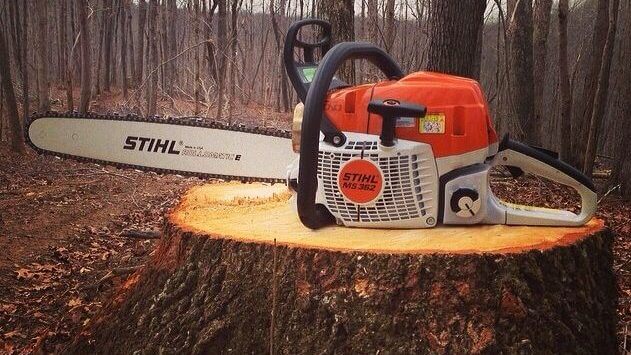

Today’s post is about how to remove Tree Stumps with a Chainsaw inexpensively and, most importantly, safely.
Removing tree stumps can be a challenging, grueling process, but there are a few tricks available to those willing to learn and put in the hard work :)
Three (3) Methods For Removing Tree Stumps:
- Pay someone else big bucks to do it for you (or)
- Rent or buy a good chainsaw, follow these six steps with safety precautions – and do It yourself.
- Use Chemical stump killers and wait about 3-5 months.
There is nothing uglier than the remains of a tree trunk, that giant stump staring you right in the face, where a beautiful tree used to be. But what is the best way to remove stumps?
We think the best, most affordable option for removing stumps is Option #2 above. Removing tree stumps with a chainsaw. If you’ve been considering using a chainsaw for tree stump removal, we’ve got some simple step-by-step instructions for you below:
Safety Tips for Removing Tree Stumps
This is the Summary of Safety Tips for removing a tree stump with a chainsaw.
- Get your protective equipment on (yes, all of it)
- Cut the tree stump down close to the ground level
- Dig all the dirt away from the stump – exposing the roots
- Cut the roots with a chainsaw
- Pry the stump from the ground
- Dispose of the stump
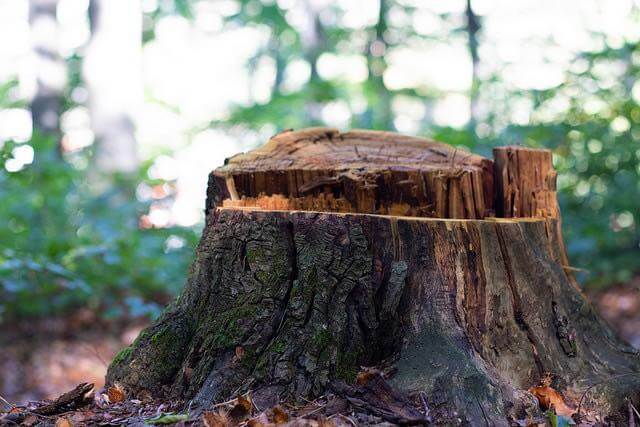
Tools Needed To Remove Tree Stumps:
There are many ways to clear those stumps, but only one gets them out quickly. Assuming that you have, at the very least, read the title of our post, you should already know what technique I’m talking about: The chainsaw.
Before removing a tree stump with your chainsaw, you should have a few other things on hand.
Tools you will need:
- Chainsaw
- Personal protective equipment (i.e., gloves, head, eye protection, hearing protection, etc.)
- Shovel
- Digging bars (these act as levers to remove the stump)
- An Ax – To cut hard-to-reach roots.
Video: “How to Use a Chainsaw” with Roger Cook of “This Old House”
The Six Steps To Remove Stumps with a Chainsaw:
Step One: Put On Your Protective Equipment
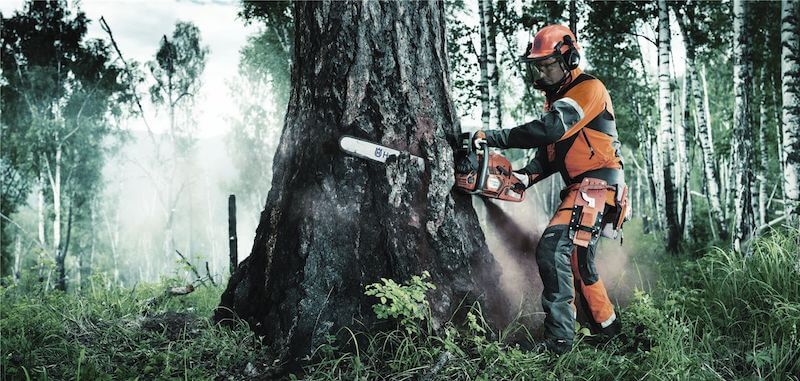
This is a simple step, but it is the most important one. Even if you are a chainsaw veteran, the dangers of operating them never go away. The hazards of chainsaws are bountiful; chains can break and hit the operator or anyone around them.
Did you know roughly 40% of chainsaw accidents occur in the leg area? Another 35% happen in the hands and wrists.
This, combined with the fact that chainsaw injuries total $350 million per year, should tell you all you need to know about how important safety is when using a chainsaw.
Step Two: Cut the Tree Stump as Low to the ground as possible

Cutting the stump low enough to the ground shouldn’t be too difficult a task to accomplish. Make sure you get all of the branches off, too. The further down you can cut the stump, the better.
Now, you can remove the tree roots from the rest of the stump.
In the next step, you must pry it out of the ground. The fewer trees you have to work with, the easier it will be to remove the stump.
When trimming the stump to the ground, apply the right amount of pressure with the chainsaw. Apply too little pressure, and you’ll never get through the tree and ruin the blade. However, excessive stress can bind the chainsaw blade or cause kickback, possibly causing injury. Keep firm pressure and move slowly.
Step Three: Shovel Dirt Away From the Stump
This step exposes the roots of the tree stump. It’s a long and labor-intensive process (like every step in stump removal), but it is essential nonetheless.
When doing this, you will need all the roots exposed. Digging several feet from the tree and as deep as two feet is probably required, which is why this step is so labor-intensive.
I’d probably dedicate an entire day to step three unless you’ve got extra hands to help.
Step 4: Cut Tree Stump Roots
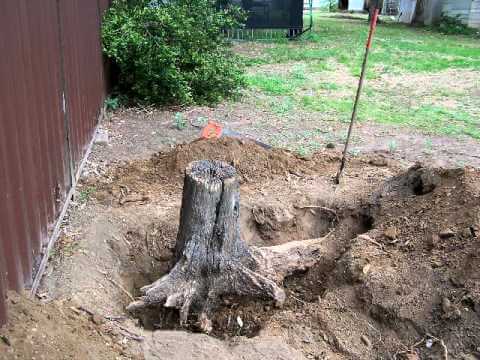
The fourth step is why the third step is so important. Cutting the roots isn’t necessarily tricky, especially if you have an excellent chainsaw. But if you don’t adequately expose the roots, you will have difficulty separating the seeds from the tree.
You should be wary when cutting through the roots; you’re working right next to the dirt, and if you mistakenly dig your chainsaw’s blade into the ground, you’ll dull it instantly.
Be sure to remove all the dirt from the roots before slicing through them.
Step 5: Pry the Tree Stump Loose:

Another highly labor-intensive step in the stump removal process, however, is the last one.
After separating the roots from the tree stump, use your digging bars (or landscaping bars) to dig the stump out of the ground. These digging bars act as levers to help you slowly pry and lift the stump from its resting place.
This part won’t be easy because the tree has been sitting there since its inception. It is downright infuriating. But once you have gotten the stump out of the ground, you are home free.
Step 6: Dispose of the Tree Stump
This is the easy part. The tree stump is likely very heavy, but moving it is nothing compared to all the work you must do to pry it from its roots and detach it from the ground.
Call someone to come pick the stump up for you. An enormous tree stump can be used to make some killer firewood.
Contact your city parks department to see if tree stumps are picked up for disposal. Otherwise, local Recycling centers will take tree stumps off your hands for a fee.
Frequently Asked Questions (FAQ):
How Do You Dispose of Tree Stumps?
A: Now that you have finally gotten that eyesore of a stump out of your yard, you will be left with a big gaping hole. The new clearing will be just as unsightly, but with tender, loving care, the yard will look great in no time.
First, you’ll want to fill and compact the hole left behind with high-quality topsoil.
Then spread your grass seed over the soil, cover it with straw, and keep the soil moist for 7-10 days to help the grass seed germinate.
The straw will help prevent the seeds from blowing away and keep birds from picking at them. Mulch will also help keep moisture in the soil; as we all know, grass needs water to grow.
How Do You “Control Burn” A Tree Stump?
A: If you want to do a controlled burn to get rid of a tree stump, you’re looking to set something on fire, but with the aid of drilling holes into the stump and allowing oxygen to increase the penetration of the fire to destroy the stump.
Repeat the same process for rotting the stump. Then follow these tips and ignite wood on top of it to avoid burns. Contact the city you are in to make sure this is legal.
Video: “Combo approach” using a Chainsaw and Controlled Burn Stump
Q: Can you use chemicals to remove Sumps?
A: Chemical stump removal involves using a chainsaw and drill, but it is still easier than manually removing it.
To use this method, you can purchase aggressive tree-stump removal chemicals, such as Bonide Stump and Brush Killer, and follow the instructions they provide.
Q: Should I Use a Professional to Remove Tree Stumps?
A: Homeowners seeking to remove tree stumps do involve certain risks. However, you can always call a professional stump-removal company.
This will save you time, energy, and the risk of injury. And if you don’t have the right tools needed to complete the job (like a chainsaw), it could save you money.
Six (6) Reasons to get rid of Tree Stumps.
There are tons of older homes with tree stumps waiting to be removed. But so many people don’t see the need to do this. Let’s look at why tree stump removal is a necessary evil.
Tree Stumps are Ugly
Tree stumps are the number one reason yards look awful. If you are looking for an aesthetically pleasing lawn (and let’s face it, that is almost certainly the reason you cut the tree down in the first place), then you definitely can’t have giant tree trunks in the middle of it.
Tree Stumps are Insect Havens
Tree stumps are just rotting trees that don’t wholly decay for a long time. During that time, the tree stump will become the home for other creatures – the kinds you don’t want.
Rotting wood will be occupied by beetles, termites, and many other creatures that make their homes in the crevices of rotting wood.
Tree Stumps Make Mowing Difficult.
Tree stumps aren’t just hard to look at; they are also hard to maneuver around.
It’s another thing blocking your path while mowing the yard. It’s more stuff for you to have to weed-eat around. And if the stump roots are exposed, it’s nearly impossible to landscape around it.
Tree Stumps are Hazards
This is a big deal if you have children, especially younger ones. Kids aren’t always paying attention to what they are doing. I can say from experience (and a lot of it) that they seldom pay attention.
The giant tree stumps often have many exposed roots, posing a severe tripping hazard for children.
And if a neighbor’s child trips and injures themselves, guess who is held accountable for that? The owner of the property is. Don’t let that be you.
The exposed roots also damage your lawnmower. Accidentally hitting a blade on exposed roots is pretty easy, and it destroys the edge.
So keep your family and lawn care equipment safe; remove those stumps already.
Tree Stumps Can Cause New Tree Growth
Tree stumps sometimes cause new tiny trees to grow around them. But not those pretty palm trees people spend over a hundred bucks on. No, we’re talking unsightly trees that nobody wants in their yard.
Once they sprout, these trees are difficult to remove. They take up valuable nutrients that all the other plants in your yard require.
Stumps Can Ruin the Yard
Tree stumps take up a giant yard swath, even if the visible part isn’t significant. Think of it like an iceberg. Everybody knows the exposed portion of the iceberg is much smaller than what lurks in the water. The same is valid with stumps.
The roots of a tree can expand several feet; we’re talking 20-plus feet in some cases.
This means that all the grass and plants you wish to plant around it aren’t getting the nutrients they need to stay healthy. The roots of the tree stump dominate everything.
Conclusion
Knowing How To Remove tree stumps will add much more value to your home, and even better, it will give you the freedom to mow without obstacles.
Tree stumps take up a lot of space in your yard and can dominate the area, preventing grass from growing around them. The net result is that your lawn is usually infested with weeds and looks dingy.
Imagine not ever mowing around that stump again, ever. And how about everything you can do with that space once you get rid of that stump?
Put down a flower bed or maybe a garden. With this added space, you can do countless things: figure out the best way to use it.
Please leave us a Google Review. Your feedback helps us grow and lets other homeowners discover our site. Click Here to share your thoughts on Google!
Additional References & Reading
- The 10 Best Chainsaw Sharpeners – Manual or Electric – Besthomegear.com
- Is your tree near a power line? Learn how to remove it here safely.
- The 6 Best Battery-Powered Chainsaws To Buy – Besthomegear.com
- How to Install a 3-Way Light Switch – Besthomegear.com
- Do you have a small tree that needs to be cut down? Read how to do it the safest way.
- The Best Cordless Leaf Blowers on the Market – Besthomegear.com
- Which Brand Makes the Best Battery-Powered Equipment? – Besthomegear.com
Photo Credit: Marco Verch, Kristian Dela Cour via Flickr CC License