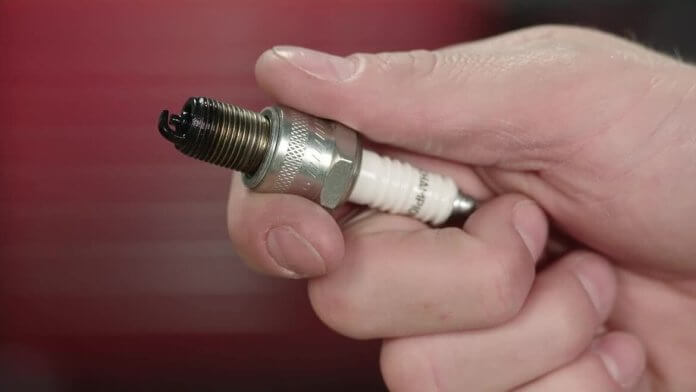

This guide will teach you How to tell if a lawn mower spark plug is bad. Because it’s a well-known fact – when your gasoline-powered lawn mower won’t start, the most likely cause is a bad spark plug.
This guide will quickly help you find and remove your lawn mower spark plug and use five (5) simple steps to determine whether it is bad.
How to Tell If Your Spark Plug Is Bad
The most common way to tell if your lawnmower spark plug is failing is that the engine is more difficult to start.
Since the engine only starts due to Two Principles: Gas and spark, and assuming you have filled the gas tank, it’s most likely the spark plug that’s the problem.
Your push mower engine may stutter and take several pulls to start. If you have a sit-on tractor mower, the engine may not start on the first turn of the key. When running, the engine may cut out, causing you to attempt to restart your lawn mower’s engine again.
You may also experience loss of power and slower acceleration. These may appear subtle at the start, but over time, they can become more and more apparent, and these signs point to a bad lawn mower spark plug.
Best Way to Check Spark on Spark Plugs: 7 Steps
- Step One: Disconnect the Spark Plug Wire
- Step Two: Remove the Spark Plug
- Step Three: Inspect the Electrode on the Spark Plug for physical damage. Replace the spark plug if the electrode is worn or damaged or bad conditions exist.
- Step Four: Determine the Electrode Condition: Is it Dry, wet, gas, or Carbon fouled?
- Step Five: If the electrode is dry and shows no damage, Test the Spark of the spark plug by doing a “test fire” of the spark plug. Watch this video to see How to Check Spark of Spark Plug:
- Step Six: If the Spark test produces a Spark but not between the electrodes, the spark plug gap must most likely be set correctly.
- Step Seven: If the engine doesn’t fire between the electrodes or doesn’t start after adjusting the spark plug gap, you probably need a new spark plug. We recommend changing a small engine spark plug once a year.
Note: If you replace the spark plug and the engine won’t start, use this article to troubleshoot engine fuel (gasoline) problems
What does a bad spark plug look like?
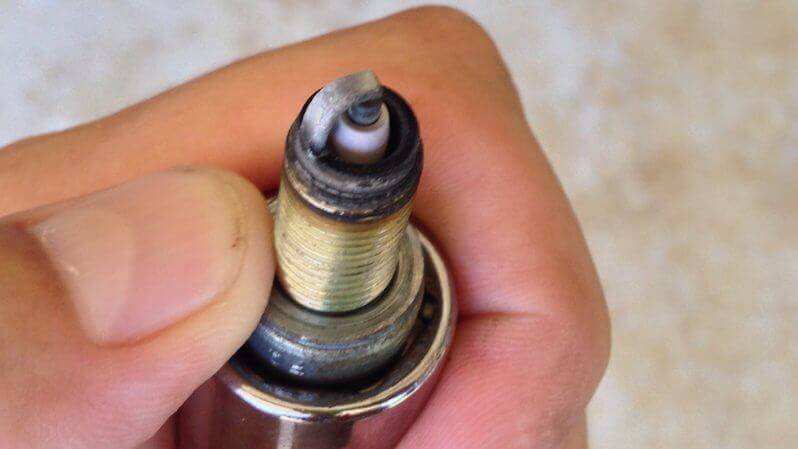
To quickly determine the condition of Your Spark Plug, Check out This Photo Chart – which illustrates all 7 Spark Plug Conditions; then compare the photos to your own Spark Plug.
Q: What Does a Spark Plug in a Lawn Mower Do?
A: The spark plug is an electrical component that fits into the engine cylinder head, and its job is to spark the ignition of the fuel to create combustion within your engine. If it’s damaged or in bad condition, you may experience many issues.
It is helpful to know why a well-conditioned spark plug is essential to running a Lawnmower engine effectively. The spark plug’s job is the same as any other small engine.
Q: Where does a Spark Plug get Power From?
A: The spark plug is connected to high voltage generated by an ignition coil or magneto. As the electrons flow from the coil, a voltage develops between the center and side electrodes.
No current can flow because the fuel and air in the gap are insulators, but as the voltage rises further, it changes the structure of the gases between the electrodes.
Once the voltage exceeds the dielectric strength of the gases, they become ionized. The ionized gas becomes a conductor, allowing electrons to flow across the gap. Small Engine—Spark plugs usually require 5-15,000 volts to ‘fire’ properly.
Other Signs That Your Spark Plug is Bad
We touched on the spark plug’s job above, and it’s essential to know this to help us understand why we may be experiencing some of the common symptoms of a bad spark plug.
We may have thought our lawnmower was experiencing engine problems, and it could cost you hundreds or require buying a new mower, but it could simply be down to a damaged or faulty spark plug.
By the way, this information on identifying a lousy spark plug works equally well when inspecting the spark plug condition for any Gas-powered weed eater or brush cutter.
Listen to Your Spark plug.
As we mentioned, once the lawnmower engine is running, it may cut out unexpectedly and for what appears to be no reason. Knowing the job of a spark plug may help you understand what is happening.
The engine cutting out is often caused by the spark created by the spark plug being too weak to ignite the fuel, which mixes with air in the carburetor.
The result can often lead to the engine becoming flooded as more fuel enters the cylinder because it is not being burnt off effectively.
Check Spark Plug Gap
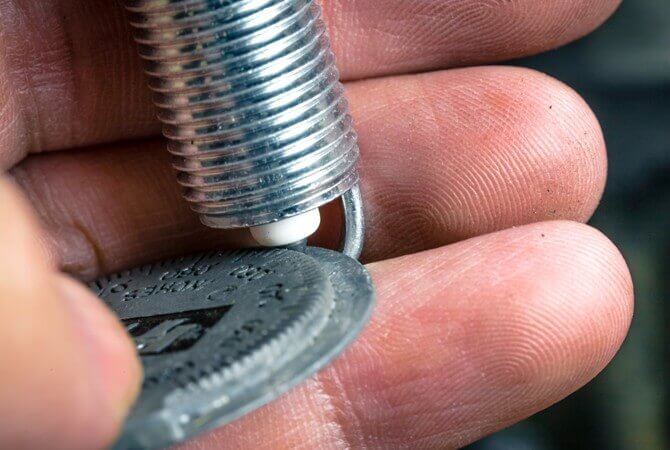
When the engine runs for long periods, the spark plug becomes hotter, increasing the gap between the spark plug center and the firing electrodes, further weakening the ignition spark.
This can be why you may need to leave the lawnmower to cool down if you’ve been trying to start it for a while but it keeps cutting out.
Excessive Gas Consumption
Excess fuel consumption is another tell-tale sign that your lawn mower spark plug is bad. You may have noticed you need to fill the engine with gasoline more often than usual. Faulty spark plugs can usually cause this.
If the gasoline isn’t wholly burnt off or inefficiently, fuel consumption will increase, and fuel efficiency will plummet.
As the gasoline isn’t being burned off as it should, you may also notice the smell of fuel in the air – often, it’ll smell like raw gasoline.
Video: “The Top 6 Reasons Your Lawn Mower Won’t Start”.
Frequently Asked Questions
Q: How often do you change the spark plug in a Lawn Mower?
A: How often must I change my lawn mower spark plug? Most experts claim you should replace the lawnmower spark plug in a standard mower once per season or after around 25 hours of use.
I believe that may be overly cautious. You may get a little more use out of it before you have to change the spark plug. A good gauge is how well your lawnmower works and whether you have any issues.
In any case, to be safe, I’d probably recommend changing your lawn mower spark plug at least every two years, even if it’s still performing well. They’re very cheap; you can usually pick them up for only a few dollars.
Q: How Do You Clean a Spark Plug?
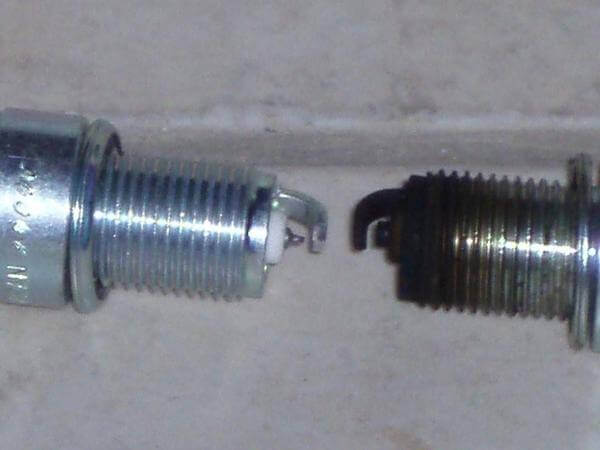
A: The age-old question: Can you clean spark plugs, and if so, How do you clean spark plugs? That’s easy. You can clean a spark plug, assuming it is wet (too much gas or oil build-up) and has not been eroded too badly (from carbon or burnt deposits).
When you remove the spark plug from a lawnmower, it immediately tells you whether it needs to be replaced or can just be cleaned up.
The center electrode (the part that delivers the spark) should have a flat, even surface on top. If you find it worn or rounded, you should change it. Also, look for cracks, chips, or physical damage to the plug’s porcelain sheath and any pitting on its firing electrode.
If it’s damaged or you’re unsure, it’s best to replace it, as they’re very inexpensive.
It can usually be cleaned if the plug is in decent condition but has some black discoloring due to oil or is wet with gasoline.
Cleaning Lawnmower Spark Plug:
Ways to Clean a Spark Plug:
A: To Clean a Spark Plug: First, spray the spark plug with brake cleaner or starter fluid and let it soak for about ten minutes. Then, wipe it with a clean cloth or rag to remove any excess residue. You can repeat this step two or three times if needed.
Once the spark plug is clean, you should inspect it again and determine if the spark plug threads look good—with no cross-threading evident—and if the electrode looks good. If you notice any previously unseen damage at this stage, it’s best to replace it.
Q: Can Using the Wrong Spark Plug Damage Your Engine?
A: The short answer is yes. It would be best to use the specific spark plug needed for your mower, as different engine models require different plugs.
A common sign the wrong spark plugs have been installed is if the electrodes are flattened or broken off. A spark plug that is too long can cause extensive damage to your lawn mower’s engine, whereas a plug that is too short can cause poor performance and fuel efficiency.
The wrong spark plug left in the engine for an extended period can cause problems with the piston rings.
Q: What causes spark plugs to Fail?
A: There are various reasons for spark plugs failing, but carbon buildup is common. A cracked distributor case, a clogged air filter, a dirty fuel injector, or an improper fuel-to-air mixture can cause this.
Another reason spark plugs fail is oil contamination. If oil seeps into the spark plug, it will damage the tip over time. If the seals fail, oil can leak into the combustion chamber.
Once you’ve determined the Spark Plug needs Replacing, Refer to the instructions below: How to Change a Lawn Mower Spark Plug.
Q: How do you change a lawn mower spark plug?
A: Replacing your lawnmower spark plug is straightforward and a more manageable lawn-mower maintenance task. You’ll only need a ratcheting socket driver, a spark plug socket, and a spark plug gauge tool.
For the novice asking where the spark plug on a lawnmower is, it can be found beneath the black spark plug wire.
The first thing you should do is check your replacement plug is the same model and shape/size as the one that’s been replaced. You can usually match them using the reference numbers on the white insulator. Next, follow the steps below to replace a spark plug:
- Disconnect the spark plug lead and clean around it
- Remove the old spark plug using a socket driver or wrench. If you’re having trouble removing it, try adding some lubricant and leaving it to soak for 10 minutes.
- Once the old spark plug is removed, inspect the electrode to see how the engine is running. If it’s too wet, there may be a problem with the engine choke system. If it’s powdery and seems too dry, there could be a problem with the carburetor mounting gasket, or it could be starved of oil.
- The final step is to insert the new spark plug into the engine’s hole. Initially, always turn the spark plug by hand; don’t cross-thread it until it stops turning.
- Then, use the spark plug wrench, a deep socket wrench, or a socket driver to tighten the plug. Don’t overtighten; make it snug. Then, you need to securely connect the spark plug wire on the top of the plug.
Video: “How to Check, Clean, And Replace a Lawn Mower Spark Plug”
Q: What size wrench do you need for a spark plug?
A: You’ll need a socket wrench to remove a spark plug. They have rubber inside to protect the spark plugs’ ceramic insulator. Sparkplug sockets come in sizes from 13/16 inches to ¾ inches.
Check the size of your spark plug and match the socket to that. Spark plug sockets are readily available online or in hardware stores.
Q: What does a white spark plug indicate?
A: If your spark plug is white or looks to be blistered, it means the plug is becoming too hot. This could be due to the engine’s cooling system or incorrect ignition timing.
Q: What does a Gap for a Spark Plug mean?
A: For the spark plug to fire effectively, the correct distance between the center and side electrodes of the spark plug must be determined.
You gap your spark plugs when you adjust the distance between the two electrodes. To do this properly, you’ll need a feeler gauge.
The gap must be a specific width. If the gap is too small, the spark doesn’t have enough space to generate the power needed to ignite the fuel.
Q: What is my lawn mower spark plug gap?
A: You’ll need to go to the manufacturer’s website or read the owners’ manual to see the exact gap in your lawnmower spark plug. However, the gap usually ranges between .020” and .030”.
Q: Where can I buy replacement lawn mower spark plugs?
A: Once you’ve got the model number from your spark plug or have referred to your user manual, you can search online for a replacement.
Amazon usually stocks engine parts of all shapes and sizes, so that could be your first port of call. You can also go to your local hardware store, where you can find a suitable replacement, assuming they stock a wide range of engine parts.
Do you need a recommendation on a Fantastic Cordless Electric Mower that does not require a Spark Plug? Check out our favorite – the Greenworks 21″ 40V Brushless Cordless Lawn Mower.
Or go with a Non-Motorized lawnmower with our Best Reel Mower Reviews.
Q: Can a faulty spark plug cause an engine to catch fire?
A: In theory, yes, but it isn’t peculiar in the case of a lawnmower. There’s less than a 1% chance of this ever happening, even if it leaks fuel.
The engine is much more likely to fail before it catches on fire. If there are any warning signs, though, or you’re worried, it’s best to consult an engine specialist for your peace of mind.
Q: How do you Tell if a Weed Eater Spark Plug is Bad?
A: Since lawnmowers and gas-powered weed eaters run on similar spark plugs, the five steps to follow at the beginning of this article – would be the same for weed eaters (string trimmers).
Q: How To Test Spark Plug With a Multimeter?
A: Using a Multimeter also makes checking a Good vs. Bad Spark Plug easy. Set the Multimeter to “Ohms.” Then, test by tapping the two leads together to show a Zero Reading. Next, connect one lead to the spark plug electrode and one to the top.
A 5,000 – 15,000 Ohms reading is typical for small engine spark plugs. The spark plug is terrible if you get a reading outside that range.
Video – How to use a multimeter to check a spark plug
Please Leave us a Google Review: Your feedback helps us grow and lets other homeowners discover our site. Click Here to share your thoughts on Google!
References and Further Reading
- How to Tell if Spark Plus is Bad and Other Reasons Your Lawnmower Won’t Start.
- DIY Lawn Equipment Repair Guide – Protoolreviews.com
- How to Inspect “Spark Plug Wires” ChampionAutoParts.com
- How do you clean and change your spark plug? – Briggs & Stratton
- How to Change the Spark Plug on a Portable Generator – JacksSmallEngines.com