Painting your home can be a rewarding DIY project, but using brushes and rollers can be slow and physically demanding, especially on larger projects.
That’s where an Airless Paint Sprayer shines. Whether you’re painting a fence, ceiling, kitchen cabinets, doors, or trim, an airless sprayer offers speed, coverage, and a professional-quality finish with far less time and effort.
Before diving into How to use an Airless Paint Sprayer, let’s explore the advantages and safety precautions you should take.
✅ Benefits of Using an Airless Paint Sprayer:
- Covers large areas in a fraction of the time of brushes or rollers
- Delivers a smooth, even coat with minimal texture
- Ideal for painting walls, ceilings, cabinets, trim, and exteriors
- Reduces physical strain on your arms and back
- Works well with a variety of paint types, including latex and oil-based
⚠️ Safety Tips When Using an Airless Paint Sprayer:
- Always wear protective gear (respirator, goggles, gloves)
- Never point the sprayer at your skin (high pressure can inject paint under the skin—seek emergency help if this happens)
- Ensure proper ventilation, especially indoors
- Practice first on a scrap surface before starting your actual project
🧰 Tools & Materials Required
Make sure you have the following tools and supplies before getting started:
- Airless paint sprayer (rental or purchase)
- Paint (latex, acrylic, or oil-based)
- Spray tips (matched to your paint type)
- Drop cloths or plastic sheeting
- Masking film and painter’s tape
- Paint strainer
- Paint bucket (5-gallon for large jobs)
- Stir sticks or a power paint mixer
- Safety goggles and a respirator
- Gloves and old clothes or coveralls
- Extension cord (heavy-duty, if needed)
- Ladder or scaffolding (for ceilings or high walls)
- Cleaning solution (specific to your paint type)
How Does an Airless Paint Sprayer Work?

An airless paint sprayer pumps paint at high pressure (typically 1500–3300 PSI) through a hose and spray gun. Unlike traditional systems that use compressed air, an airless sprayer atomizes paint by forcing it through a small nozzle opening.
This results in a fine mist that adheres evenly to surfaces.
Key Components:
- Pump: Pulls paint from the bucket and pressurizes it
- Hose: Delivers the pressurized paint to the gun
- Spray Gun: Controlled by a trigger, it disperses paint through the spray tip
- Spray Tip: Determines spray pattern width and flow rate
Each tip has a number (e.g., 515): the first digit times two equals the spray width (10″), and the last two digits are the orifice size (0.015″).
How to Use an Airless Paint Sprayer “Outdoors”

Outdoor surfaces, such as siding, decks, and fences, are ideal candidates for airless sprayers. Here’s how to do it right:
Step-by-Step:
- Prep the Surface:
- Clean surfaces using a pressure washer or scrub brush
- Let dry completely (24 hours minimum)
- Repair or caulk any cracks or gaps
- Mask and Protect:
- Cover windows, doors, light fixtures, plants, and the ground using plastic sheeting and painter’s tape
- Choose the Right Tip:
- Use a wider fan tip (e.g., 515 or 517) for large areas like siding
- Prime the Sprayer:
- Follow your sprayer’s instructions to flush the pump and fill the line with paint
- Spray Technique:
- Hold the gun 10–12 inches from the surface
- Keep a consistent pace and paint with parallel strokes
- Overlap each pass by 50% to avoid streaks or gaps
- Watch the Weather:
- Avoid painting in windy or rainy conditions to prevent overspray or paint wash-off
How to Use an Airless Paint Sprayer “Indoors”

Indoor painting with an airless sprayer can dramatically speed up room makeovers—but it requires more preparation to control overspray.
Step-by-Step:
- Ventilate & Protect:
- Open windows and use fans
- Wear a respirator mask
- Cover furniture, floors, outlets, and fixtures with plastic sheeting and painter’s tape
- Start at the Top:
- Begin with the ceiling, then move to the walls
- Use a smaller tip (e.g., 413 or 515) for better control indoors
- How to Paint a Room with an Airless Sprayer:
- Hold the gun 12″ from the drywall
- Apply paint in vertical passes, overlapping slightly
- Move your arm instead of your wrist for a consistent finish
- How to Paint a Ceiling with an Airless Sprayer:
- Use a hand-held spray shield to prevent overspray on walls
- Start from the corner and work sideways, in even rows
- Use an extension airless spray pole to work in high places
- How to Paint Kitchen Cabinets with an Airless Sprayer:
- Remove cabinet doors or drawer fronts, and lay flat on a drop cloth
- Spray in multiple light coats using a fine-finish tip (e.g., 210 or 312)
- Let each coat dry and harden overnight before flipping doors and drawers or reapplying a second coat.
- How to Paint Doors and Trim with an Airless Sprayer:
- Detach doors if possible for easier spraying
- Use a narrower spray tip (e.g., 311 or 411)
- Mask around trim carefully and use shorter passes for tighter control
How to Use a “Graco” Airless Paint Sprayer
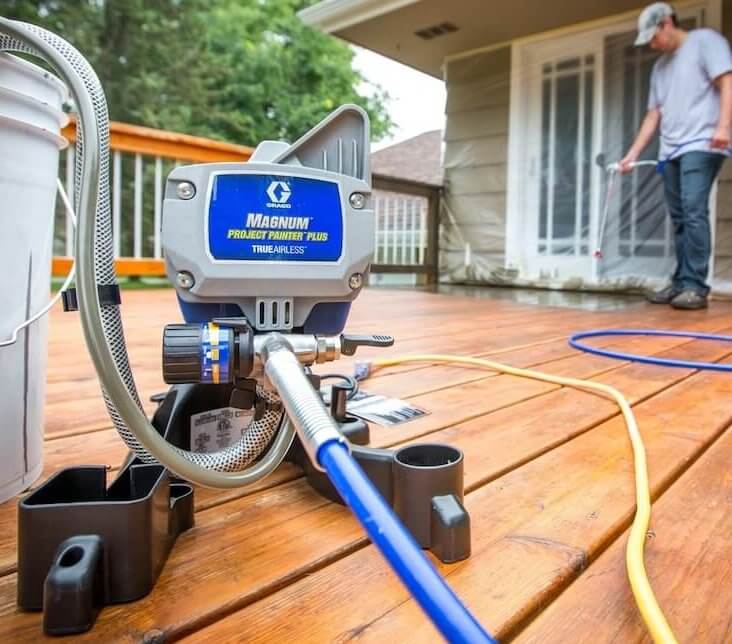
Graco is undoubtedly the leading manufacturer of airless paint sprayers, offering models suitable for both professionals and DIY enthusiasts. Here’s how to use one effectively:
Graco Paint Sprayer Setup Tips:
- Assemble Properly: Connect the hose, gun, and tip securely
- Prime the System: Use the prime valve to eliminate air from the pump
- Use the Correct Tip: Match your tip to paint viscosity and surface size
- Adjust Pressure: Start low and increase until the spray pattern is even
Best Practices for Graco Users:
- Use the Graco tip selector tool online to find the right match
- Clean after every use—Graco units are known for easy flushing
- Use a reversible tip to quickly clear clogs mid-project
Incidentally, I use a Graco Magnum airless paint sprayer for all the properties I own. In Arizona, I primarily use it for applying sealer to brick walls, and in Michigan, I use a Graco for Painting Interiors and Exteriors of Homes.
Admittedly, it can be intimidating for beginners, but an airless sprayer is surprisingly easy to use. You’ll be glad you invested in an airless sprayer from the very first use, saving incredible time and labor.
Video for Beginners: “How to Use a Graco Airless Sprayer”
FAQs – Painting with an Airless Sprayer
Q: Is an airless sprayer better than using a roller or brush?
A: Yes—for large or textured surfaces, an airless sprayer is significantly faster and gives a more even finish.
Q: What type of paint works best with airless sprayers?
A: Latex, acrylic, and oil-based paints work well. Just make sure to thin the paint if required and use the right spray tip.
Q: How much overspray should I expect?
A: Indoor jobs may have 30–40% overspray without proper masking. Always use protective covers and spray shields.
Q: Can I use the same sprayer for ceilings, walls, and cabinets?
A: Yes, but use different tips and adjust pressure accordingly. Cabinets require finer tips for detailed work.
Q: How do I clean my airless paint sprayer?
A: After each use, thoroughly flush the filter, hose, and tip with water (or a solvent for oil-based paints).
Conclusion: Should You Use an Airless Paint Sprayer?
If you’re looking for speed, professional results, and efficiency on large painting projects, then learning how to paint with an airless paint sprayer is one of the smartest DIY upgrades you can make.
From painting a room to reviving kitchen cabinets, an airless sprayer helps you tackle projects with less mess and more confidence.
Just remember: the key to success is prep, technique, and cleanup. Practice on scrap materials, start with light coats, and always mask off what you don’t want painted.
Ready to give your home a fresh coat of color the easy way? Fire up your airless sprayer—and spray like a pro.
Please Help Us by Leaving a Google Review! Your feedback helps us grow and lets other homeowners discover our site. Click here to share your thoughts on Google.
References and Additional Reading:
- Avoiding Paint Fumes – Healthline.com
- How To Wire a 3-Way Switch – Besthomegear.com
- Cabinet Painting Mistakes To Avoid – GoodHousekeeping.com
- How to Remove Popcorn Ceilings – BestHomeGear.com
- Best Type of Paint Finish (Sheen) for Cabinets – Homedepot.com